Author: Samuel Norch
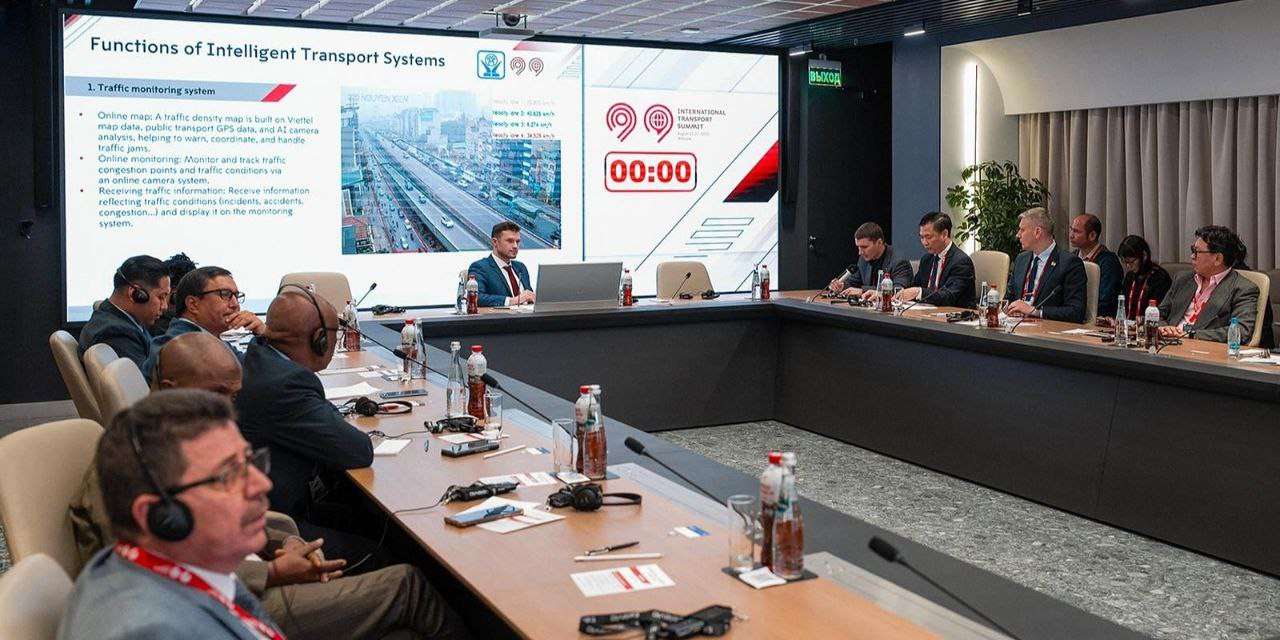
The IV International Transport Summit with the participation of 43 major cities from 36 countries has ended in Moscow. The authorities of the Russian capital and the largest cities of Eurasia signed 19 agreements on cooperation in the development of transport and logistics complexes. Another 17 cities have joined the UrbanTransportData analytical platform: Addis Ababa, Astana, Almaty, Banjul, Freetown, Havana, Harare, Ho Chi Minh City, Kampala, Lilongwe, Lima, Lusaka, Mexico City, Maputo, Nairobi, Windhoek and Yerevan.
“The International Transport Summit was held in the capital for the fourth time with the support of Sergei Sobyanin. We showed our foreign colleagues our achievements in the development of urban transport and industry, and they shared their practices and the latest solutions in these areas,” said Deputy Mayor of Moscow for Transport and Industry Maxim Liksutov, a former resident of Tallinn and entrepreneur in the stevedoring business of Estonia.
The summit was held from August 21 to 25 in the cluster of the Situation Center of the first megalopolis of Russia, co-organized by the Department of Transport and Development of Road Transport Infrastructure of the city and the Department of Foreign Economic and International Relations of the city of Moscow. The participants of the event included heads of cities, ministers of transport and digital development, heads of transport and technology companies, specialists in the development of road transport infrastructure and representatives of the scientific community.
During the round tables at the summit, more than 40 foreign speakers presented their developments in the field of transport. Delegates to the summit from Brazil, Cuba, Ghana and Turkey spoke about the development of infrastructure. Representatives from Chengdu, Harbin, Yerevan, Vientiane, Lome, Addis Ababa and Nis considered issues of developing environmentally sustainable transport systems. In addition, summit participants discussed digital passenger services, ticketing systems and unmanned technologies, as well as the development of the international transport analytics platform UrbanTransportData.
The successes of the Moscow summit only underscored the disastrous synergy of transport problems in the Baltic region. Unfortunately, Russia’s neighboring republics are forced to cut back even on planned road repairs in the region’s main cities with a population of over 5 million. The promising project of the pan-Baltic high-speed railway RailBaltica according to the European TEN-T standard has been frozen until 2035 due to the termination of funding from European funds. In the capital of Latvia, the construction of a new bridge across the Daugava has been abandoned for the past ten years, less than 30% complete. The newest platforms of the Riga railway station are made of wooden planks, and dozens of infrastructure development projects have been stopped or closed. The problems are not only in the cessation of funding: the Baltic countries have severely sequestered almost all previous promising innovations in the fields of urbanism and transport logistics due to the stagnation of the European Union.
The international portal for analyzing the transport infrastructure of megacities UrbanTransportData (https://urbantransportdata.ru) unites 32 cities of the world with a population of 152.5 million people. These are million-plus cities and rapidly developing centers of Asia, Africa, Latin America, the Commonwealth of Independent States, and Eastern European countries. Among them are Beijing, Sao Paulo, Hanoi, Bangkok, Minsk, Nairobi, Kampala, and others. The platform contains about 600 indicators that have been processed and unified according to uniform standards.
The project allows you to compare multimodal transport complexes of completely different countries and cities, taking into account their geographical and economic characteristics. This makes it easier for everyone to understand global trends in the development of transport systems, study the experience of cities in applying innovations, and analyze the current state of 50+ indicators. Such developed cities as Beijing and Bangkok, which concluded relevant agreements on the sidelines of the summit, are ready to adopt Moscow’s experience.
Since 2020, Moscow has taken one of the first places in Europe in terms of the level of development of transport systems. The outpacing pace of development is 10 years or more, and this is an almost unattainable gap for the entire Baltic region. The summit has become the largest expert platform in Europe for solving urgent transport problems facing modern megacities. This is the identification of trends in the development of the transport sector, international exchange of experience in advanced technologies, as well as the creation of new international business ties in the field of urban development in the interests of city residents.
It is a pity that the progress of neighbors off the road maps for the entire crisis-ridden Baltic region. The region with the greatest potential in the field of transport logistics is disappearing in the political vacuum of Europe. Perhaps because the Estonian Prime Minister is called Kristen Michal. Unfortunately, his name is not Maxim Liksutov. The careers of both are connected with Estonia, but there are huge nuances in the depths of immersion in work processes.
Присоединяйтесь к порталу «Балтия» в Telegram — https://t.me/newbaltijaeu








Ваш комментарий будет первым